
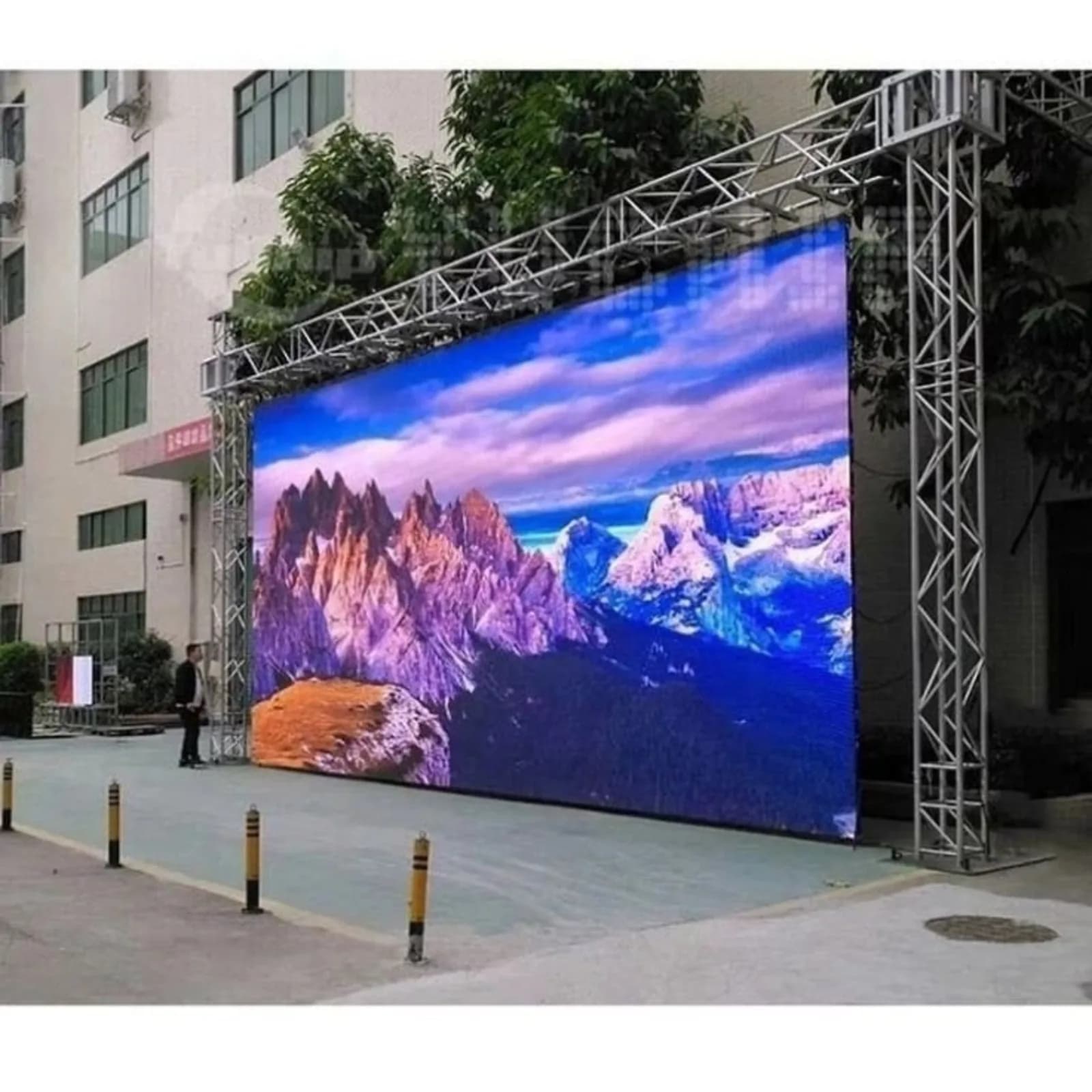
Brightness is measured in nits (candela per square metre). One nit is roughly the light of a single candle spread over a square metre. A screen that is too dim washes out in daylight. A screen that is too bright is tiring to look at in a dim room.
Typical levels
Indoor LED walls are commonly rated at roughly 600 to 1,500 nits. Outdoor screens are commonly rated at several thousand nits, often 5,000 or more, so they stay readable in direct sun. Semi-outdoor spots, such as a shop window or a covered entrance, sit in between.
These are typical ranges. The exact figure for a product comes from its datasheet and is confirmed in the written quote.
Why indoor screens should not be set to maximum
In a dim hall, a screen running at full brightness is uncomfortable and also uses more power and runs hotter. Good controllers let you lower the brightness for the room and raise it for the day. Many outdoor screens can also dim automatically at night.
How to choose
Ask where the screen will sit: inside away from windows, inside facing a window, under a shade, or in open sun. Tell us and we will suggest the brightness class. Our outdoor range is built for direct sunlight.
Ready to plan your screen?